
By Shannon Michael Jones

Freedom in Christ doesn’t mean doing whatever we want. True freedom is choosing daily to let the Spirit guide our thoughts, words, and actions—while our flesh constantly fights for control. This struggle between flesh and Spirit is not new; it is the very tension the Apostle Paul addressed in his letter to the Galatians. In a world full of modern temptations and distractions, we, too, wrestle with the pull of selfish desires, anger, pride, and envy. How do we recognize when the flesh is winning, and how can we allow the Spirit to take the lead in every area of our lives?

The Apostle Paul wrote to the Galatians to address their deep struggle with confusion about salvation and the Christian life. False teachers had crept in, insisting that true salvation could only be secured by keeping the Old Testament law, placing heavy burdens of legalism upon the people. In response, Paul passionately reminded them that salvation is not earned through rituals or works, but received freely by the grace of God through faith in Jesus Christ. His message was clear: the cross of Christ is sufficient, and the believer’s life is not to be lived in bondage to the law or to the flesh, but in the freedom and power of the Spirit.
Yet even with this truth, many believers misunderstood what it meant to live in that freedom. Some began to distort the message of grace, using it as an excuse to continue in sin, while others clung tightly to strict rule-keeping under the law, hoping it would secure their righteousness. Paul made it clear that both extremes missed the heart of the gospel. True freedom in Christ is not found in indulging the desires of the flesh or in becoming enslaved to legalism, but in living each day under the guidance and power of the Holy Spirit.

Paul draws this sharp contrast to reveal the outcome of two very different ways of living. A life driven by the flesh leads only to corruption, emptiness, and destruction, but a life surrendered to the Spirit produces fruit that reflects Christ, pleases God, and brings blessing to others. In doing so, Paul reminds the believers that it is the Spirit—not the flesh—that defines and empowers the true Christian life.
This very struggle is alive in the hearts of believers today. Every day we feel the tension of that tug-of-war—the cravings of the flesh pulling us toward selfishness, anger, pride, or compromise, while the Spirit gently but powerfully calls us to love, obedience, and holiness. The battle is often subtle, showing up in the choices we make with our time, our words, our relationships, and even our thoughts. In a world that constantly tempts us to indulge the flesh—through the pursuit of pleasure, possessions, or recognition—the call to walk in the Spirit is more vital than ever. It is in yielding to the Spirit’s leading that we discover true freedom and bear fruit that glorifies God.

Though we no longer bow before stone idols, modern life is filled with its own subtle forms of idolatry—our careers, the pursuit of pleasure, the desire for possessions, and even the elevation of self. These idols may not be carved from stone, but they wield a quiet power, shaping our priorities, decisions, and affections. The works of the flesh continue to appear in our lives, often dressed in modern clothing: impatience in traffic, envy scrolling through social media, selfish ambition at work, or anger toward loved ones. Too often, these behaviors feel normal—or even justified—yet they are still the fruit of a life turned inward, away from the Spirit. Recognizing them is the first step in turning back to God and allowing His Spirit to transform us from the inside out.
Let’s take a closer look at what Paul teaches about the works of the flesh and the fruit of the Spirit, and why this contrast is so vital for our daily walk with Christ.
Works of the Flesh
Galatians 5:19–21

“Now the works of the flesh are manifest, which are these; Adultery, fornication, uncleanness, lasciviousness, Idolatry, witchcraft, hatred, variance, emulations, wrath, strife, seditions, heresies, Envyings, murders, drunkenness, revellings, and such like: of the which I tell you before, as I have also told you in time past, that they which do such things shall not inherit the kingdom of God.”
Paul calls these “works” because they are driven by our human nature and sinful desires rather than by God’s Spirit. They are destructive, self-centered, and pull us away from God’s holiness. He warns that making a lifestyle out of such behaviors leads to separation from God and the emptiness that comes from living apart from Him.
Fruit of the Spirit

Galatians 5:22–23
“But the fruit of the Spirit is love, joy, peace, longsuffering, gentleness, goodness, faith, Meekness, temperance: against such there is no law.”
Here, Paul shifts from “works” to “fruit,” emphasizing that these qualities are produced not by our own effort, but by the Spirit working within us. Each of these traits reflects the character of Christ—selfless, God-centered, and focused on others. When Paul says, “against such there is no law,” he means that these virtues fulfill God’s law of love rather than breaking it; they cannot be condemned because they reflect God’s heart and purpose.
The Fruits of the Spirit in Daily Life

Love – This is not just an emotion but a decision to put others first. Love is seen when we forgive someone who has wronged us, serve without expecting anything in return, or choose kindness even when it’s hard. It reflects God’s own love, which sent Christ to the cross for us.
Joy – Joy is deeper than happiness. It doesn’t depend on sunny days or perfect circumstances but flows from knowing we belong to God. Even in trials, joy sustains us, reminding us that God is faithful and our hope is secure in Christ.
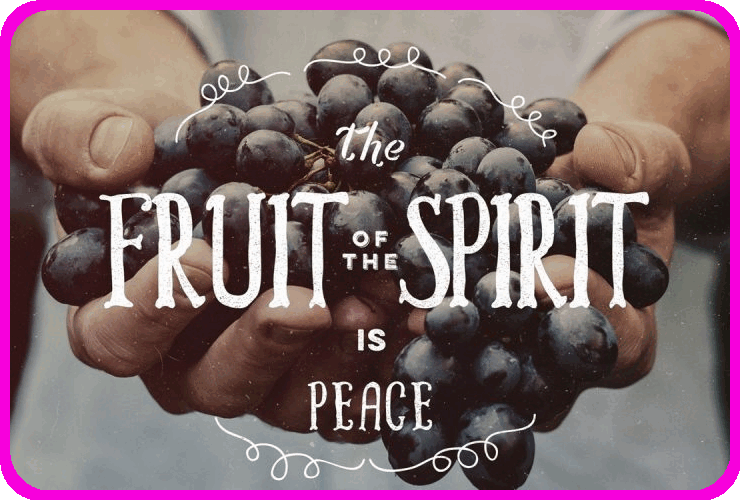
Peace – True peace comes from trusting God’s control, even when life feels chaotic. It’s the calm assurance that anchors us when anxiety rises, allowing us to rest in God’s promises instead of being shaken by fear.
Longsuffering (Patience) – Patience is revealed when we endure difficulties without bitterness. It’s seen in waiting on God’s timing, handling frustrations with grace, and bearing with others’ weaknesses as Christ bears with ours.
Gentleness (Kindness) – Kindness shows in simple but powerful ways: offering encouragement, lending a helping hand, or speaking words that heal rather than wound. It mirrors the tender heart of Christ toward those in need.
Goodness – More than just “being nice,” goodness is moral integrity and active righteousness. It’s choosing honesty when lying would be easier, standing for what is right, and allowing God’s holiness to shine through our actions.
Faith (Faithfulness) – Faithfulness is about loyalty and reliability. It’s being steady in prayer, trustworthy in relationships, and unwavering in commitment to God, even when the world offers easier paths of compromise.
Meekness – Meekness is strength under control. It doesn’t mean weakness, but humility and gentleness. A meek spirit responds to criticism without retaliation and carries authority with humility, reflecting the heart of Jesus.
Temperance (Self-control) – Self-control helps us resist temptation and live disciplined lives. It shows up when we choose prayer over anger, purity over indulgence, or wise words instead of rash ones. It’s the Spirit enabling us to master our desires rather than be mastered by them.
Together, these nine qualities paint a beautiful portrait of Christlike character. They cannot be manufactured by willpower alone, but grow naturally as we yield ourselves to the Spirit day by day. The fruit of the Spirit is living evidence that Christ dwells within us, shaping us to reflect His love, His holiness, and His grace to a watching world.
The battle between flesh and Spirit is not won in a single moment but in the daily choices of surrender. Every word we speak, every thought we entertain, and every action we take is shaped by whether we yield to the pull of the flesh or the power of the Spirit. The works of the flesh come naturally—but the fruit of the Spirit comes supernaturally, as God transforms us from the inside out.

This was Paul’s urgent message to the Galatians: salvation is not found in works of the law, nor is freedom found in indulging the flesh. True freedom in Christ is the joyful liberty of walking with the Spirit—empowered to live in a way we could never achieve on our own. When we love in the face of hate, show patience in trials, extend kindness to the undeserving, and practice self-control when tempted, we put Christ on display to a world desperate for hope.
The question is not whether the battle is real—it is. The question is: Who will we allow to lead our lives—the flesh that destroys, or the Spirit who gives life? Just as Paul reminded the Galatians, the Spirit is both our freedom and our power. When we choose to walk by Him, we don’t just avoid sin—we bear fruit that reflects Christ Himself. And that is the freedom we were created to live in.