
By Shannon Michael Jones

Jeremiah 18:1-6
1The word which came to Jeremiah from the Lord, saying,
2 Arise, and go down to the potter’s house, and there I will cause thee to hear my words.
3 Then I went down to the potter’s house, and, behold, he wrought a work on the wheels.
4 And the vessel that he made of clay was marred in the hand of the potter: so he made it again another vessel, as seemed good to the potter to make it.
5 Then the word of the Lord came to me, saying,
6 O house of Israel, cannot I do with you as this potter? saith the Lord. Behold, as the clay is in the potter’s hand, so are ye in mine hand, O house of Israel.
Go Down to the Potter’s House

God sometimes teaches us through pictures we can see and experiences we can understand. In Jeremiah 18, God did not simply give Jeremiah a message and tell him what to say. Instead, He told him to “Arise, and go down to the potter’s house” (Jeremiah 18:2). There, Jeremiah would witness something ordinary—a potter working with clay—but God would use it to reveal an extraordinary truth about His relationship with His people.
Jeremiah watched as the potter worked the clay on the wheel. What appeared to be a simple act of craftsmanship became a lesson about God’s authority, patience, and purpose. The potter had control over the clay, shaping it according to his will. Likewise, God desires to work in our lives, molding us according to His purpose.
Before God can teach us something about the clay, however, we must be willing to go where He leads us. Jeremiah had to arise, leave where he was, and go down to the potter’s house before he could hear what God wanted him to learn. Sometimes the first step toward understanding God’s work in our lives is simply being willing to follow Him.

The Potter Is Working on the Clay
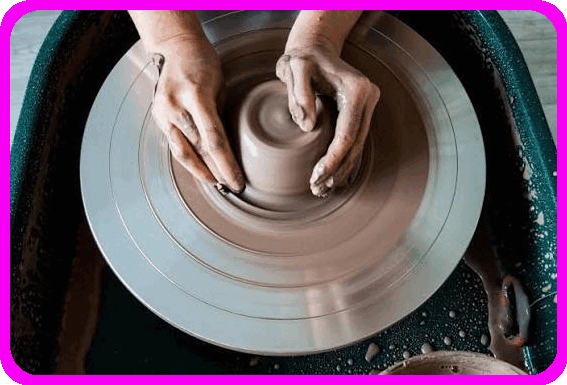
When Jeremiah arrived at the potter’s house, he found the potter already at work. “Then I went down to the potter’s house, and, behold, he wrought a work on the wheels” (Jeremiah 18:3). The potter was not standing around waiting for the clay to become something on its own. He was actively shaping it with his hands.
The clay could not shape itself. It needed the hands of the potter to give it form, purpose, and usefulness. In the same way, God is continually working in the lives of His children. He works through His Word, through circumstances, through correction, and through the experiences He allows us to face. His work may not always make sense to us while it is happening, but He sees what we cannot see.
The potter’s wheel reminds us that God’s work in our lives is often a process. There are seasons of pressure, change, correction, growth, and molding. The pressure of the Potter’s hands may not always be comfortable, but it serves a purpose. What feels like pressure to the clay may be part of the Potter’s plan for shaping the finished vessel.
We should not resist God’s hands simply because we do not understand His process. The clay does not need to understand every movement of the Potter’s hands; it needs to remain in them. When God is working on us, we can trust that He knows what He is doing—even when we cannot yet see what He is making.
The Clay Became Marred

As Jeremiah watched the potter work, something went wrong. “And the vessel that he made of clay was marred in the hand of the potter” (Jeremiah 18:4). The vessel was not turning out as the potter intended. The clay had become marred, but the potter did not throw it away.
There is something deeply encouraging about this picture. The clay became marred while it was still in the potter’s hand. Being marred did not mean the potter had abandoned it. It did not mean the clay was worthless. It simply meant the vessel had not become what the potter intended it to be.
We can become marred, too. We make mistakes. We make poor decisions. We experience disappointment, failure, and seasons when life does not turn out as we expected. Sometimes we allow sin to damage areas of our lives. Other times, circumstances beyond our control leave us wounded and struggling. We may look at what has happened and wonder if God can still use us.
The potter’s response gives us hope. He did not discard the marred vessel. He continued working with the clay.
A mistake does not have to be the end of our story. A season of failure does not mean God is finished with us. When we place ourselves back into His hands, He can work with what has been damaged and begin shaping us again.
Notice what Jeremiah does not say. He does not say the clay was worthless. He says it was marred. There is a difference. Something can be damaged without being useless. Something can be broken without being beyond restoration.
Perhaps you are looking at something in your life and see only the damage. God sees something else. He sees clay still in His hands. Being marred is not the same as being abandoned.
The Potter Made It Again

The story does not end when the vessel becomes marred. Jeremiah tells us, “so he made it again another vessel, as seemed good to the potter to make it” (Jeremiah 18:4). Instead of throwing the clay away, the potter began working with it again. He took what had become marred and reshaped it into another vessel.
What a picture of God’s grace and restoration. God does not always give up on us when we fail. He can take the broken pieces of our lives and continue His work. Our failures may change us, and some consequences may remain, but failure does not have to determine the rest of our lives. When we surrender ourselves to God, He can reshape us and give our lives a renewed purpose.
Notice the wording: “as seemed good to the potter to make it.” The potter decided what the vessel should become. The clay did not determine its own shape or tell the potter what it wanted to be. The potter knew what he was doing.
We often want God to work according to our plans. We may ask Him to fix our lives in a particular way, restore what we lost, or give us the future we have imagined. But sometimes God has something different in mind. He may not return us to exactly what we were before. Instead, He may reshape our lives into something new.
That requires trust. We must trust the wisdom of the Potter rather than insist on our own design. We may not understand why God allows certain things to happen or why He chooses to take our lives in a different direction. But the Potter sees what the clay cannot see.
The marred vessel was not discarded. It was made again. That is the hope we have when we place our lives in God’s hands. He is not limited by our failures, our past, or the damage we have experienced. If we remain surrendered to Him, He can continue shaping us into the vessel He desires us to be.
We Are the Clay in God’s Hands

After Jeremiah watched the potter work with the clay, God made the meaning of the lesson clear: “O house of Israel, cannot I do with you as this potter? saith the LORD. Behold, as the clay is in the potter’s hand, so are ye in mine hand, O house of Israel” (Jeremiah 18:6).
God was speaking directly to Israel, but the picture also gives us an important truth about our relationship with Him. We are the clay, and He is the Potter. The lesson is not simply about becoming a better version of ourselves. It is about surrendering ourselves to God and allowing Him to do His work in us.
Clay does not tell the potter what shape it should take. It does not argue with the hands shaping it or demand that it become something different. The potter determines its form and purpose. Likewise, we must be willing to let God correct us, mold us, change us, and remove the things in our lives that do not belong.
That kind of surrender can be difficult. We naturally want control over our lives. We want to make our own decisions, follow our own plans, and determine our own future. Yet if we truly believe God knows what is best for us, we must trust Him enough to place ourselves in His hands.
Being in God’s hands means we are under His authority, but it also means we are under His care. The Potter is not working against the clay. He is working for a purpose. His hands may apply pressure when correction is needed, but those same hands are holding us throughout the process.
We may not understand every change God makes in our lives. We may question why He allows certain circumstances or why He takes us in directions we did not expect. But we can trust the One doing the shaping.
The same hands that shape the clay are the hands that hold the clay. We do not have to fear the Potter’s work when we know the Potter.
Stay in the Potter’s Hands

The lesson Jeremiah learned at the potter’s house is one we need to remember when life does not go according to plan. Perhaps God is trying to change something in your life, but you are resisting His hands. Perhaps a failure from your past has convinced you that God is finished with you. Or perhaps you are frustrated because God is not shaping your life according to the plans you made for yourself.
Whatever your situation, remember the vessel in Jeremiah’s vision. The clay became marred, but it remained in the potter’s hands. The Potter did not throw it away. He made it again.
Your failures do not have to be the final chapter of your life. God can reshape what has been damaged. He can restore what has been broken and make something useful from what appears to have lost its purpose. His grace is greater than our failures, and His purposes are greater than our plans.
We may not understand everything God is doing while we are on the wheel. We may experience pressure, correction, change, and circumstances we would never have chosen for ourselves. But we can trust the Potter because He sees the finished vessel while we can only see the clay.
Our responsibility is not to become the Potter. Our responsibility is to remain clay in His hands. When we surrender our will to His, trust His wisdom, and allow Him to shape our lives, He can make us into the vessel He desires.
So stay in the Potter’s hands. When you are being molded, trust Him. When you are being corrected, listen to Him. When you are marred, do not give up. And when you cannot understand what He is doing, remember who holds you.
You may be marred, but you are not abandoned. You may be broken, but you are not beyond His reach. You are still in the Potter’s hands.